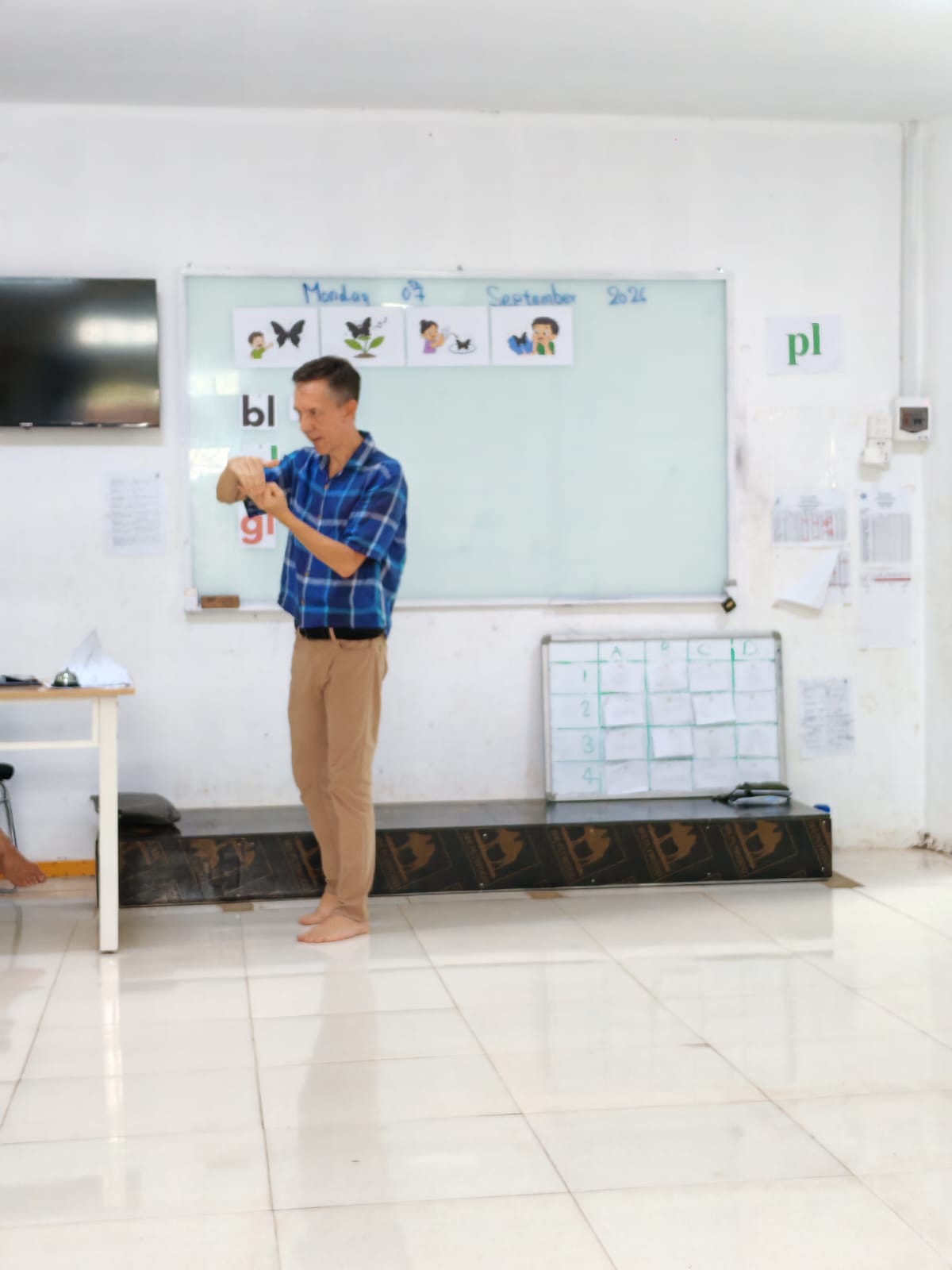
Classroom experience
Planned and taught English lessons to Cambodian learners aged 7–14 during teaching experience in Siem Reap.
BASED IN SIEM REAP · AVAILABLE IMMEDIATELY
I am a South African, TEFL-certified English teacher with 16 years of tutoring and learner-support experience, including teaching experience in Cambodian classrooms.
CV AT A GLANCE
Planned and taught English lessons to Cambodian learners aged 7–14 during teaching experience in Siem Reap.
Years of tutoring developed my ability to break difficult ideas into simple, manageable steps.
Counselling training and preschool experience help me respond patiently to different emotional and learning needs.
TEACHING APPROACH
Visual and active — gestures, pictures, movement and simple demonstrations.
Student-centred — more learner participation and meaningful speaking time.
Calm and encouraging — clear instructions, patient correction and specific praise.
Prepared and adaptable — structured lesson plans adjusted to the learners in front of me.
TEACHING & LEARNER SUPPORT
SEPTEMBER 2026
Destination TEFL / Savong Organisation · Siem Reap, Cambodia
Planned and taught English lessons to learners aged 7–14; prepared materials and practised lesson planning, classroom management, learner engagement and reflective teaching.
2024–2026
South Africa
Taught Mathematics Literacy to learners in Grades 10–12.
2020–2021
Oompie Ke Doompie Preschool · South Africa
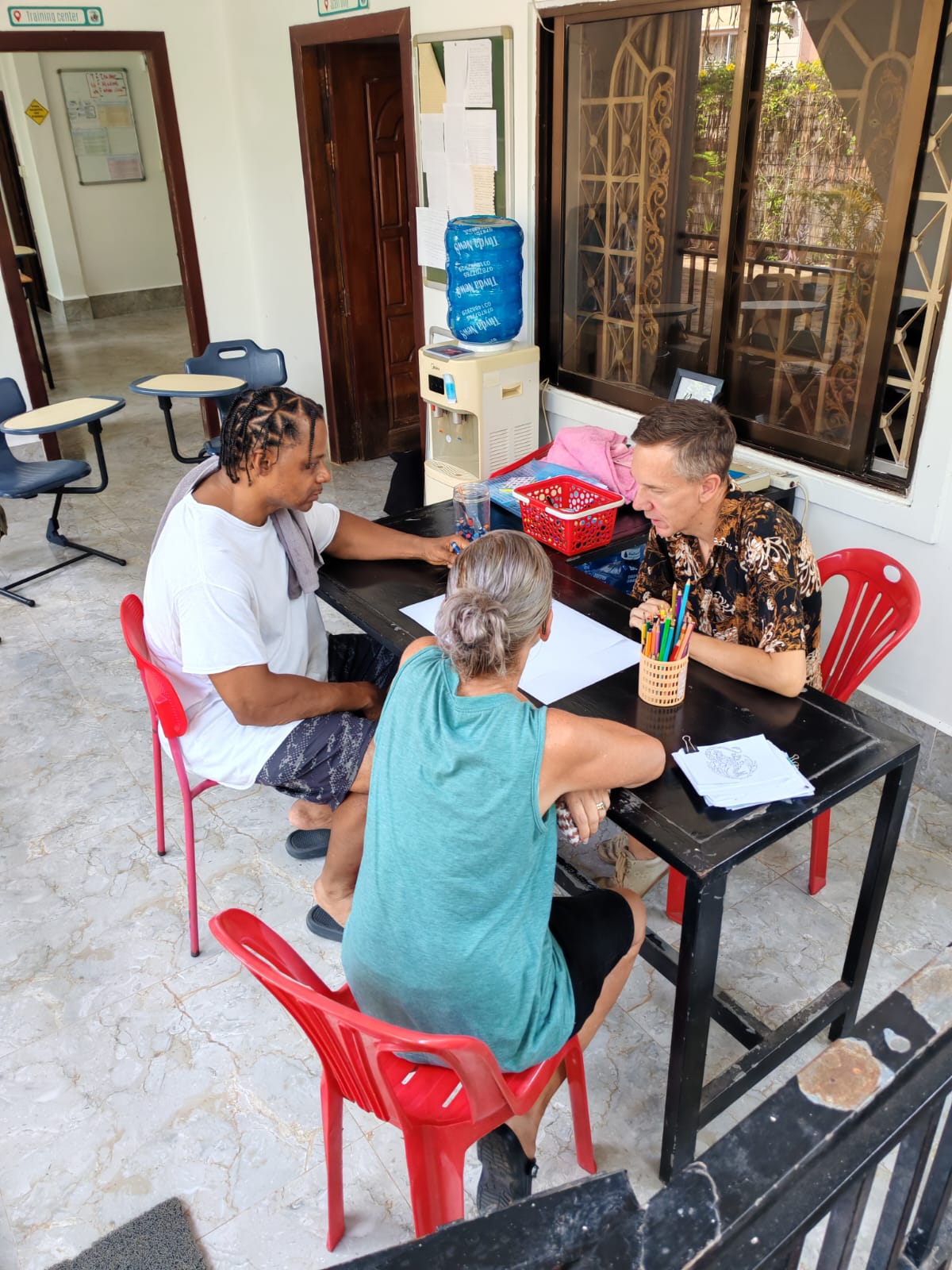
Helped young learners with emotional and learning problems.
2016–2020
South Africa
Provided individual academic support tailored to learners’ needs.
2012–2016
South Africa
Helped learners strengthen study methods, organisation and confidence.
2011–2012
South Africa
Taught computer programming to students aged 16.
2009–2011
South Africa
Provided afterschool homework help to students aged 7–14.
EDUCATION & TRAINING
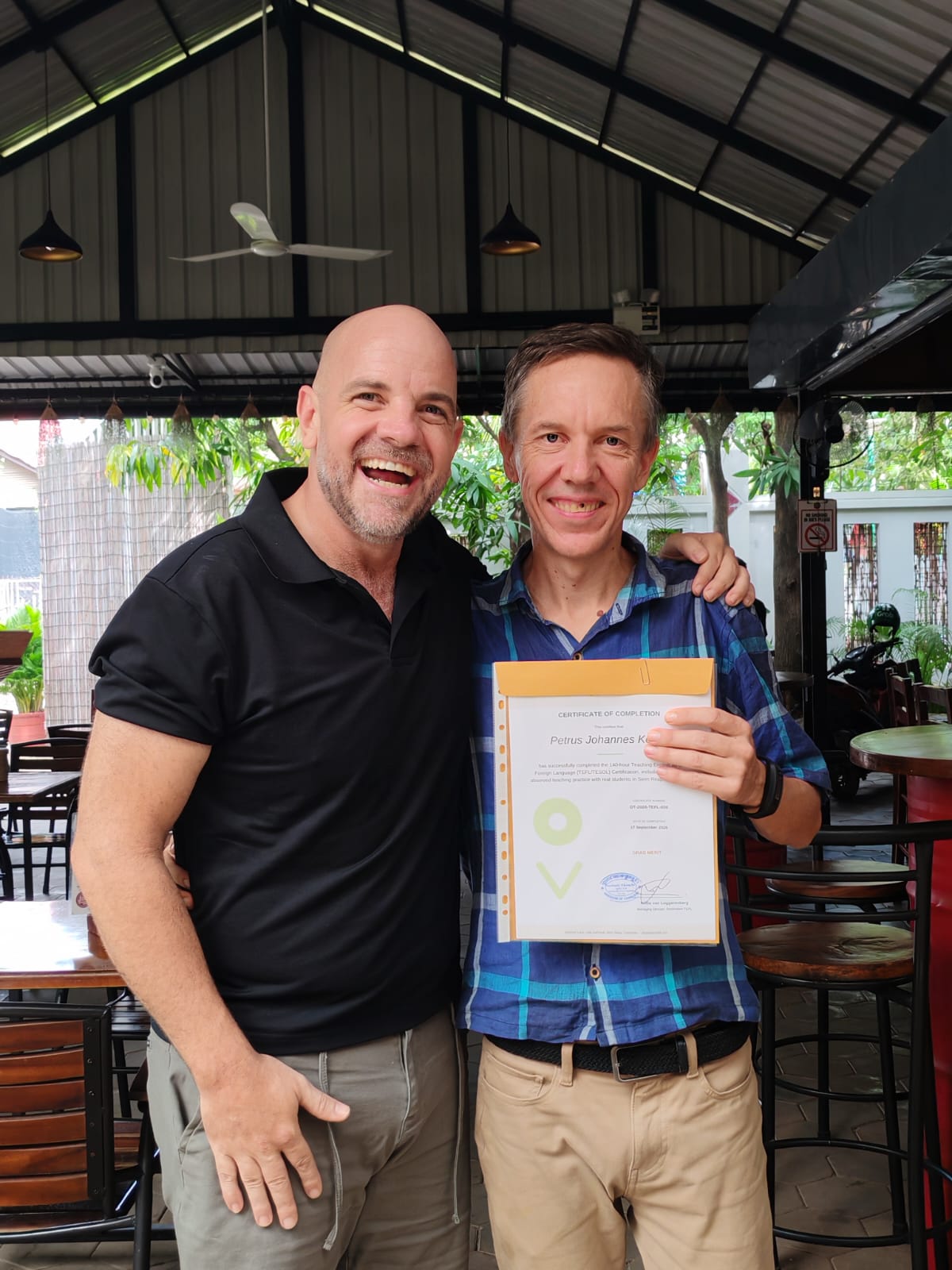
SEPTEMBER 2026
Destination TEFL · Siem Reap
JUNE 2015
University of South Africa
JANUARY 1992
OFS Department of Education · South Africa
English, Afrikaans, Mathematics, Physical Science, Biology, Technical Drawing and Computer Studies.
ADDITIONAL WORK EXPERIENCE
2021–2024
Cow Farm · South Africa
2002–2009
Nova Scotia Cheese Factory · South Africa
Worked in cheese production and maintained the factory’s accounting records.
2000–2002
RE/MAX Properties · South Africa
Provided data-capture and graphic-design support for a real-estate agent.
ADDITIONAL VALUE
LET'S TALK
I am based in Siem Reap and open to teaching, assistant, substitute, cover and part-time opportunities.
Professional references available from Destination TEFL and Genesis Books.
BEYOND THE CLASSROOM
My work as a poet strengthens my sensitivity to language, imagery and memorable expression.